
Choosing the best sleep tracker depends on clear goals. If detailed brain data matters, try EEG headbands, but for long-term patterns, wearables like rings may suit better. Consider comfort—rings are discreet, headbands more involved. Think about features like sleep stages, total sleep time, or environment controls. Budget is key too; some devices need extra subscriptions. Matching your priorities with device capabilities helps. Want tips on narrowing options? Continue exploring for smarter sleep choices.
Clarify Your Sleep Goals and Priorities
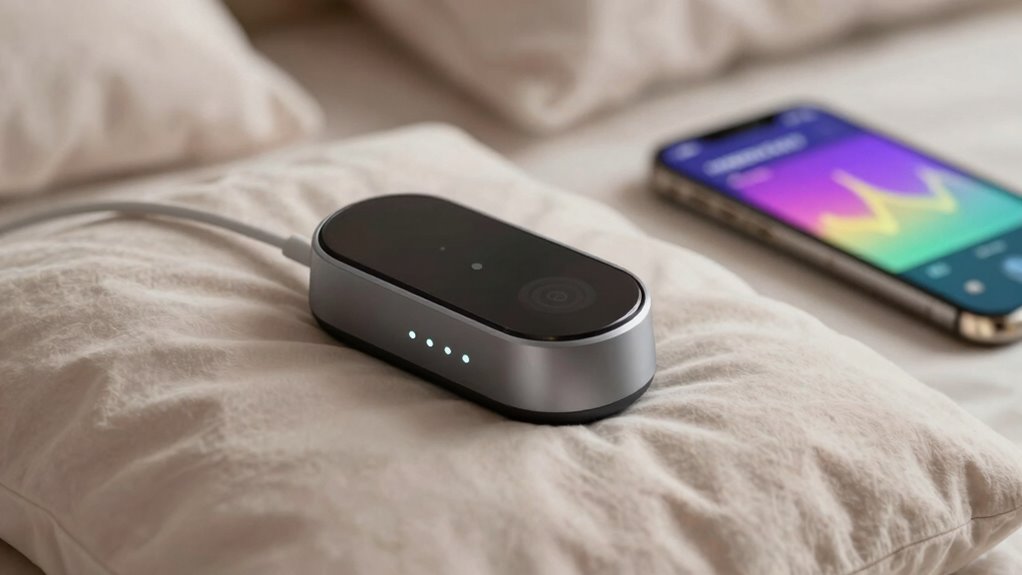
Have you ever wondered what exactly you want from a sleep tracker? Clarifying your sleep goals is the first step. Are you after deep sleep insights and brain-measured data, like with the Muse S Athena? Or perhaps you prefer long-term recovery trends to improve overall rest, as the Oura Ring 4 offers. Your choice impacts which features matter most, whether in-sleep interventions, passive tracking, or data depth.
Wearability also plays a role. Headbands can be uncomfortable overnight, while rings tend to be more comfortable and suitable for daily use. Additionally, consider how detailed the data should be, from EEG-based brain activity to broader metrics like HRV and SpO₂. Matching your goals with these factors helps you pick the right sleep tracker that fits your needs and lifestyle.
Understand the Types of Sleep Trackers and Their Capabilities
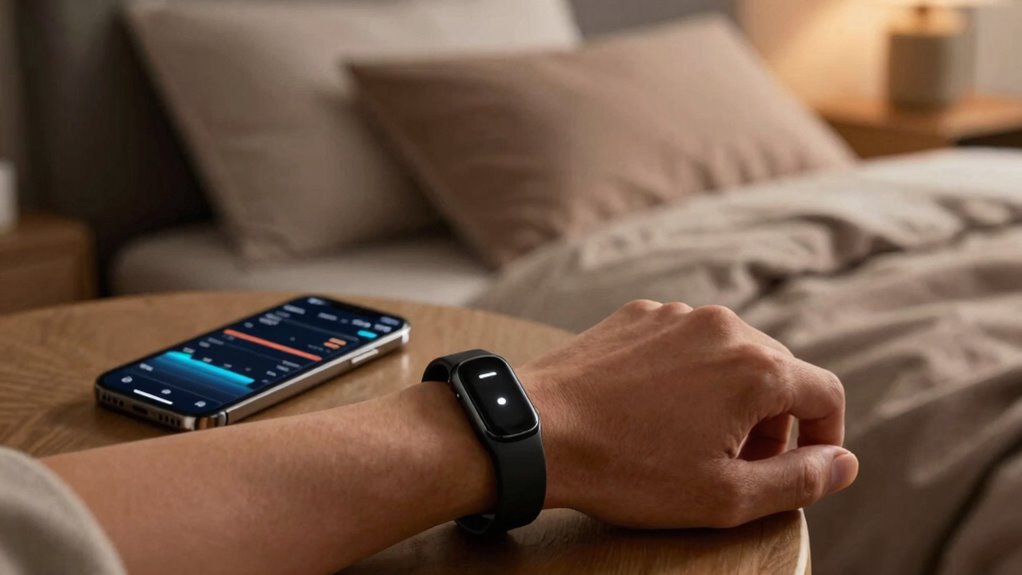
Different types of sleep trackers are designed to fit various lifestyles and preferences, each offering unique ways to gather sleep data. These tracking devices include wearables like rings and wristbands, under-mattress sensors, smart mattresses, and smartphone apps. Each has different capabilities for measuring sleep metrics such as sleep stages (REM, Deep, Light), total sleep time, and sleep quality scores.
Wearables like the Oura Ring focus on comfort and long-term trends, while active devices like EEG headbands provide real-time brain activity data. Under-mattress sensors offer a non-intrusive option but may have less detailed sleep staging. Some devices also connect with coaching features or require subscriptions, making it important to choose one that aligns with personal sleep goals and comfort preferences.
Recommended Products
Evaluate Key Metrics and Data You Want to Track
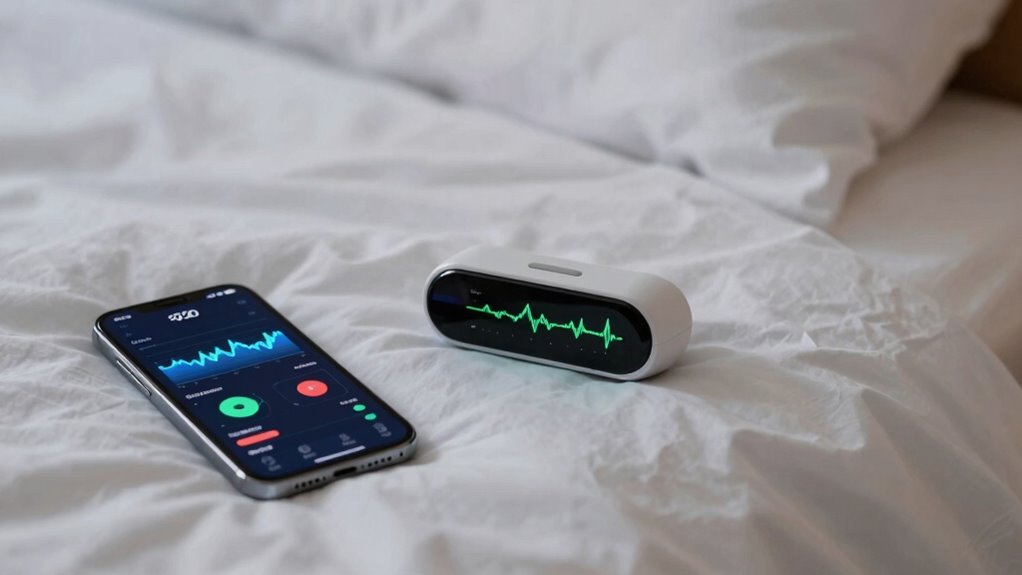
When choosing a sleep tracker, it’s helpful to think about which specific sleep metrics matter most to personal goals. Sleep staging, which includes REM, Deep, and Light sleep, offers insights into sleep quality, while total sleep time helps track overall rest. Some devices, like Muse S Athena, use EEG/fNIRS technology for detailed sleep staging and real-time feedback, making them ideal for deep analysis.
Others, such as Oura Ring 4, focus on passive tracking with Sleep Score, derived from heart rate variability, temperature, and movement. Sleep data platforms vary, with some offering comprehensive views of sleep performance, efficiency, and latency. Understanding which metrics align with personal health goals ensures choosing a device that provides meaningful, actionable data.
Consider Comfort, Usability, and Integration Features
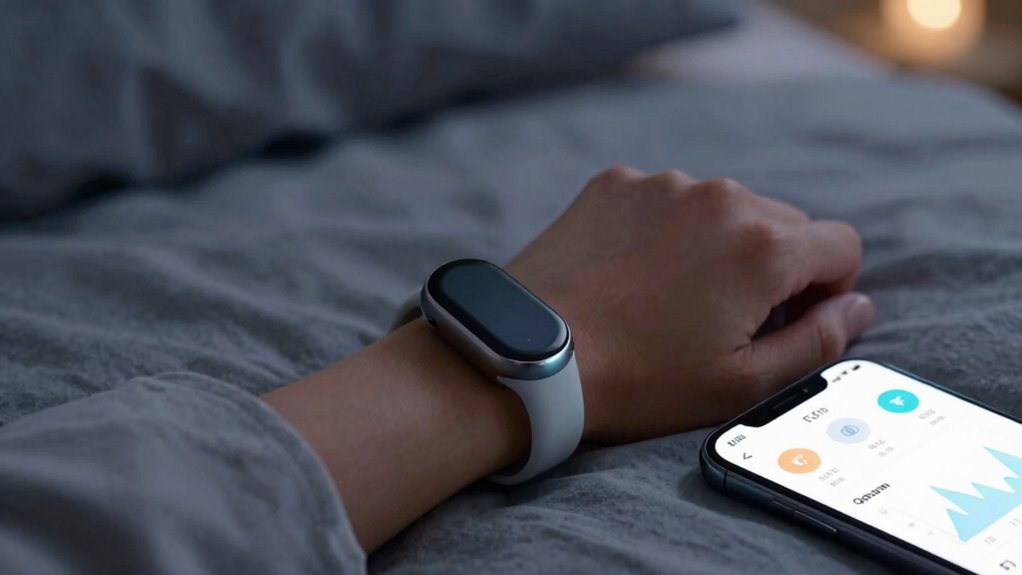
Considering comfort, usability, and integration features is essential because these aspects can make or break the sleep tracking experience. Comfort ensures users can wear or place devices overnight without discomfort, whether it’s a ring like the Oura Ring 4, a headband like Muse S Athena, or a non-wearable option such as the Withings Sleep Mat.
Usability influences how easily users can access and interpret their data. Some apps offer simple navigation and quick overviews, while others provide detailed, data-heavy screens. Integration features enhance the overall experience by automating environment adjustments or providing real-time feedback, like the Eight Sleep Pod 5’s environment control or Muse S Athena’s audio interventions.
Balancing these factors helps users find a device that fits both their sleep needs and daily routines comfortably.
Recommended Products
EMAY Sleep Breathing Monitor for Airflow Tracking
Check each seller's condition and delivery.
Apple Watch Series 8 [GPS 45mm] Smart Watch w/Silver Aluminum Case with White Sport Band - M/L. Fitness Tracker
Check each seller's condition and delivery.
Match Your Budget and Subscription Preferences to Your Needs
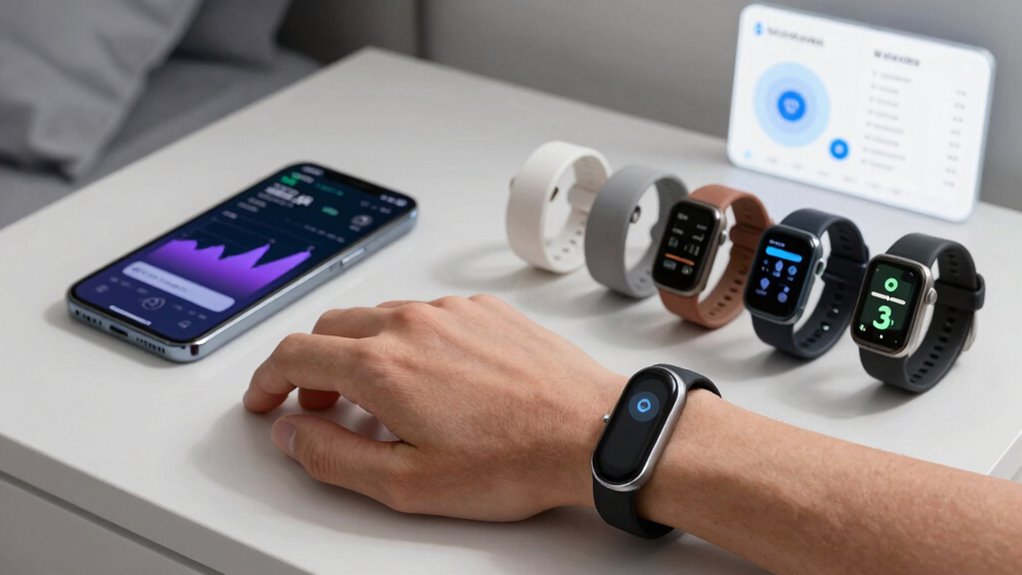
Matching a sleep tracker to personal budget and subscription preferences is a practical step that can make a big difference in long-term satisfaction. Some devices, like the Oura Ring 4, offer a one-time purchase price ($499), which is ideal for those who prefer no recurring fees. However, users should budget for app subscriptions if they want deeper insights into their sleep.
Others, such as the Whoop 5.0, require a mandatory subscription for access to coaching and recovery data, making it important to contemplate ongoing costs. Budget-friendly options like the Withings Sleep Mat or Sleepon Go2Sleep provide passive tracking without hefty upfront costs but may need separate subscriptions for advanced features.
Balancing your budget with your subscription needs ensures a sleep tracker that fits both your finances and sleep goals.