
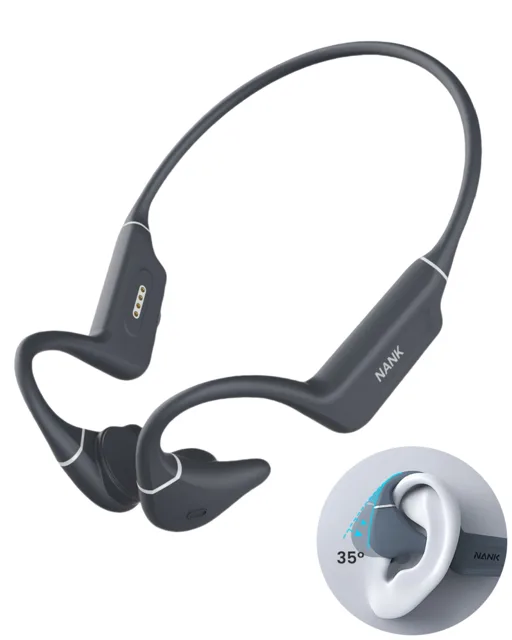
Nank Runner Diver2 Pro Review
We may earn a commission from some links on this page.
The Nank Runner Diver2 Pro is a bone-conduction sports headset from Naenka, built for swimming as well as running and cycling. Nank gives it an IP69 rating, 32GB of onboard music, up to 10 hours of play and Bluetooth 5.4 for land use. It weighs 32g and the box includes swimming earbuds and a silicone strap. This review looks at what the listing states, how bone conduction behaves for a runner, and where the limits sit, with the cheaper Runner Diver2 and Runner 4 alongside for comparison.
Table of Contents
Key Takeaways
- An IP69 bone-conduction headset built for swimming as well as running and cycling.
- 32GB of music stored on the headset itself, with up to 10 hours of playback.
- Bluetooth 5.4 on land, and Nank notes that only the MP3 mode works underwater.
- The box includes swimming earbuds and a silicone strap, and the headset weighs 32g.
- It can stay paired to two Bluetooth devices at once.
What the Runner Diver2 Pro Is
The Runner Diver2 Pro sits at the top of Nank's sports range. It is a bone-conduction headset rather than an in-ear pair: the transducers rest on the cheekbone in front of the ear and send vibration through the bone, leaving the ear canal open. That is the whole point of the design for a runner, because an open ear still hears traffic, a cycling bell or a training partner while music plays.
What makes this model different from a running-only headset is the water. Nank rates it IP69, gives it 32GB of internal storage for music that plays without a phone, and includes swimming earbuds and a silicone strap in the box. Those additions are what turn a road headset into one you can take into a pool.
How Bone Conduction Behaves
Bone conduction is not the same listening experience as a pair of in-ears, and it is worth understanding why before buying. Because nothing sits inside the ear canal, bass has less material to move: the low end of a track arrives as a suggestion rather than a thump. What you gain is awareness. On a road or a trail, hearing a car approach from behind is not a luxury, and an open ear keeps that channel open.
The trade works in both directions. In a quiet gym or a pool, an open design means you hear the room as well as the music, and at high volume the sound can carry to the people beside you. Bone-conduction headsets are also sensitive to placement: the transducer has to sit on the bone, not float above it, so the band needs to fit closely without pressing hard. That is a fit question rather than a sound question, and it is the reason a headband style suits running better than a loose pair of hooks.
Swimming and Land Use
Underwater, Bluetooth does not travel, which is why the storage matters. Nank states that only the MP3 (TF) mode works in the water, so the routine is straightforward: load tracks onto the 32GB of internal memory, switch to the player when you get in, and use Bluetooth when you are back on dry land. The included swimming earbuds are for the pool, where water in the ear changes how bone conduction reaches the inner ear.
On land the headset is a normal Bluetooth pair, with version 5.4 on the listing. That is the mode for running, cycling and the gym, where a phone in a pocket or an armband stays connected. The IP69 rating means the sweat and the rain are not the concern they are on an ordinary pair, and the strap in the box is there to hold the band steady when the fit alone is not enough.
Battery, Storage and Fit
Nank gives the battery as up to 10 hours, which is a long session by any measure: a marathon, a long ride or several pool visits between charges. Music capacity is 32GB on the headset, which is far more than most people will fill, and it means the phone can stay in a locker for a swim.
At 32g the headset is light enough to forget about on a long run, and the band-and-transducer shape keeps it off the ear canal. Fit is the one thing to think about before ordering: a bone-conduction band has to sit snugly on the cheekbone, and anyone who wears glasses should expect the arms and the band to share the same space behind the ear. The silicone strap in the box is the answer for a loose fit, especially in water.
Two devices can stay paired at once, which is useful if you carry a watch and a phone: the headset holds both and switches to whichever is playing. That is the same multipoint idea found on ordinary headphones, applied to a sports headset.
Detailed Features
The table collects what Nank publishes for the Runner Diver2 Pro.
| Type | Bone-conduction sports headset |
|---|---|
| Use | Swimming, running and cycling |
| Water rating | IP69 |
| Onboard music | 32GB MP3 storage |
| Playback | Up to 10 hours |
| Bluetooth | 5.4 on land; MP3 mode only underwater |
| Weight | 32g |
| In the box | Swimming earbuds and a silicone strap |
| Connections | Two Bluetooth devices at once |
Advantages and Disadvantages
Reasons to consider it
- An IP69 rating that covers the pool as well as the road.
- 32GB of onboard music, so a swim does not need a phone.
- Up to 10 hours of playback and a 32g frame.
- Swimming earbuds and a strap included for water use.
- Two Bluetooth devices paired at once.
Reasons to pause
- Bone conduction gives up bass depth compared with in-ears.
- Bluetooth does not work underwater, so swimming means the MP3 player.
- An open ear lets pool or gym noise in alongside the music.
- The band has to fit closely on the cheekbone, which glasses can complicate.
Other Options
If the pool is not part of the plan, the same range offers cheaper ways into bone conduction. The Runner Diver2 is the previous swimming model with 32GB of storage, a 10-hour battery and Bluetooth 5.3, and the Runner 4 is the lowest-priced pair here with 16GB of music and an 8-hour battery.
Verdict
The Runner Diver2 Pro is the right shape for someone who wants one headset for the pool, the road and the gym without putting anything in their ears. The IP69 rating, the 32GB of stored music and the 10-hour battery cover the water, and Bluetooth 5.4 covers everything dry. The compromises are the ones bone conduction always brings: less bass, an open ear, and a fit that has to be right. If you only run, the cheaper models in the range do the same job.
For a sports headset, the small extras are about storage and transport: an open-ear pair and a cheaper running model are the two alternatives worth a look if you want to spend less or wear something lighter.
Frequently Asked Questions
Does It Work Underwater?
Yes, in MP3 mode. Nank states that only the MP3 (TF) mode works underwater, so Bluetooth is for land use and the onboard player is for the pool.
What Does the IP69 Rating Mean?
IP69 is a high water and dust rating from the IP standard, covering protection against dust and against high-pressure water jets. Nank lists it for this model.
How Much Music Does It Hold?
32GB of internal storage. That is enough for a large library of MP3 files, and it is the mode used in the water.
Can It Connect to Two Devices?
Yes. Nank states that it can stay paired to two Bluetooth devices at once, so a watch and a phone can both be connected.
Is Bone Conduction Comfortable for Long Runs?
The open design keeps the ear canal clear, and at 32g the headset is light on the head. Comfort then depends on the band sitting correctly on the cheekbone, which the included strap helps with.