

Choosing the best Linux laptop involves balancing compatibility, performance, and repairability. Trusted brands like Dell and Lenovo often offer models tested with Linux, but it’s wise to test hardware via live USBs before buying. Focus on powerful CPUs, enough RAM, fast storage, and upgrade options. Consider battery life and portability if mobility matters. Long-term support and community backing are essential for developers. If these pointers intrigue, exploring further will reveal even more tips for finding the perfect machine.
First pick: Which Hardware Specifications Matter Most for Developers and Power Users? — Search eBay
What Are the Key Factors to Consider When Choosing a Linux Laptop?
Have you ever wondered what makes a laptop ideal for Linux users, especially developers and power users? The key factors include Linux compatibility, hardware upgradeability, and driver support.
Linux compatibility means choosing devices from trustworthy brands like Dell or Lenovo, known for working well with Linux, whether new or used. Hardware upgradeability is also important; selecting models with easy access to RAM and storage allows future upgrades, saving money long-term.
Driver support is crucial, too—ensuring essential components such as WiFi, graphics, and power management have reliable Linux drivers. Testing distributions with live sessions before installation can help verify everything works smoothly.
Which Hardware Specifications Matter Most for Developers and Power Users?
When choosing a laptop for demanding tasks like development and power use, certain hardware specs can make a significant difference in performance and overall experience. CPU power and cores are crucial. Look for processors with many cores, such as a 24-core Intel Core Ultra 9 275HX, because they handle heavy compiling, virtualization, and media work smoothly.
RAM capacity also matters. A minimum of 8 GB is necessary, but 16 to 32 GB or more is ideal for running IDEs, containers, and multiple virtual machines without slowing down. Fast NVMe SSD storage, preferably 1–2 TB or larger, ensures quick boot times, speedy project loads, and easy handling of large codebases.
Together, these specs create a responsive, efficient environment for serious development and power tasks.
Recommended Products
EYY 16" Laptop Computer Intel Core i5 Processor
Check each seller's condition and delivery.
How Do You Verify Linux Compatibility Before Buying a Laptop?
Checking if a laptop will run Linux smoothly before buying it is an essential step that can save a lot of headaches later on. One effective method is live USB testing, which lets users run Linux directly from a USB stick without installing it. This approach helps verify hardware compatibility, especially for Wi-Fi, graphics, and power management, before making a purchase.
It’s also wise to consult vendor documentation. Many manufacturers, like Tuxedo or System76, provide detailed Linux support guides and hardware testing results. Additionally, looking for laptops with well-supported components, such as Intel GPUs, can simplify the process.
Recommended Products
Logitech M185 Compact Ambidextrous 2.4 GHz Wireless Mouse - Swift Grey
Check each seller's condition and delivery.
Persberg 360pcs 12sizes Laptop Notebook Tiny Computer Replacement electronic Screws Assortment Kit Black
Check each seller's condition and delivery.
CHONCHOW Mechanical 60% Gaming RGB Keyboard 61 Keys Wired USB DIY Customize Backlight Macro keypad Ultra-Compact Blue Switches Compatible with Windows Mac Linux Laptop PC Computer(Black)
Check each seller's condition and delivery.
What Are the Best Brands and Models for Linux Support?
Choosing the right brand and model for Linux support can feel like navigating a maze, but some companies stand out for their reliability and user-friendly features. Dell and Lenovo are well-known for their Linux laptops, offering solid hardware compatibility and affordability, especially with second-hand options.
System76’s Lemur Pro is praised for its balance of size, weight, and power, with high configurations that include up to 8 TB storage and 56 GB RAM. Framework Laptop shines for its upgradeability and Linux compatibility, allowing users to easily boost RAM and storage.
The Kubuntu Focus Zr Gen 1 is tailored for high performance with strong Linux support, while the Purism Librem 14 offers excellent compatibility and battery life, though at a premium price.
Recommended Products
EZITSOL 32GB 9-in-1 Linux Bootable USB Drive for Beginners
Check each seller's condition and delivery.
How Important Are Upgradability and Repairability for Your Linux Laptop?
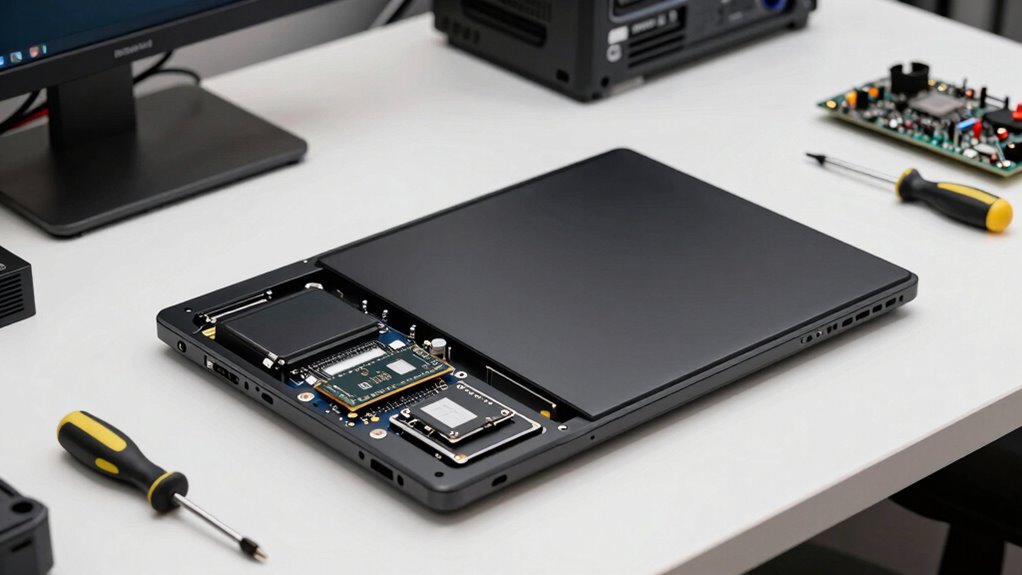
Ever wondered why some Linux laptops seem to last longer or adapt better to changing needs? Upgradability and repairability play a big role in that. For example, the Framework Laptop stands out because it allows users to upgrade RAM, storage, and other components easily. This flexibility extends the laptop’s longevity, meaning it can stay useful even as technology advances.
Its compatibility with Linux is strong, supported by tested operating systems like Ubuntu and Arch Linux, plus a helpful community for parts. While battery life might be a minor concern, the ability to replace or upgrade parts means users can keep their device running smoothly for years.
Which Storage Options Provide the Best Performance and Compatibility?
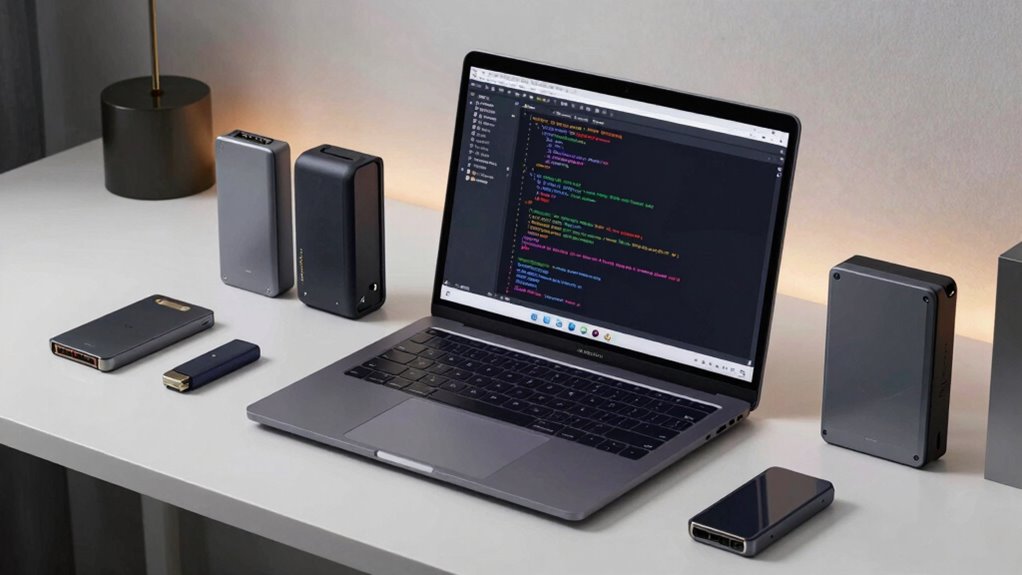
When it comes to storage options for Linux laptops, performance and compatibility are two key factors that often influence the choice. NVMe drives, especially M.2 SSDs, are popular because they offer fast boot times and quick load speeds, making them ideal for demanding tasks. However, compatibility can vary, so checking if the SSD is supported by the Linux kernel is important.
SATA SSDs are more reliable and widely supported but tend to be slower. Linux kernel support is essential—upgrading the kernel or drivers may be needed for newer NVMe models. For those looking to upgrade, many Linux laptops support multiple drives, including large capacity SSDs up to 8 TB.
Ultimately, matching the drive type with proper kernel support ensures both top performance and smooth compatibility.
What Linux Distributions Are Easiest for Beginners and Advanced Users?
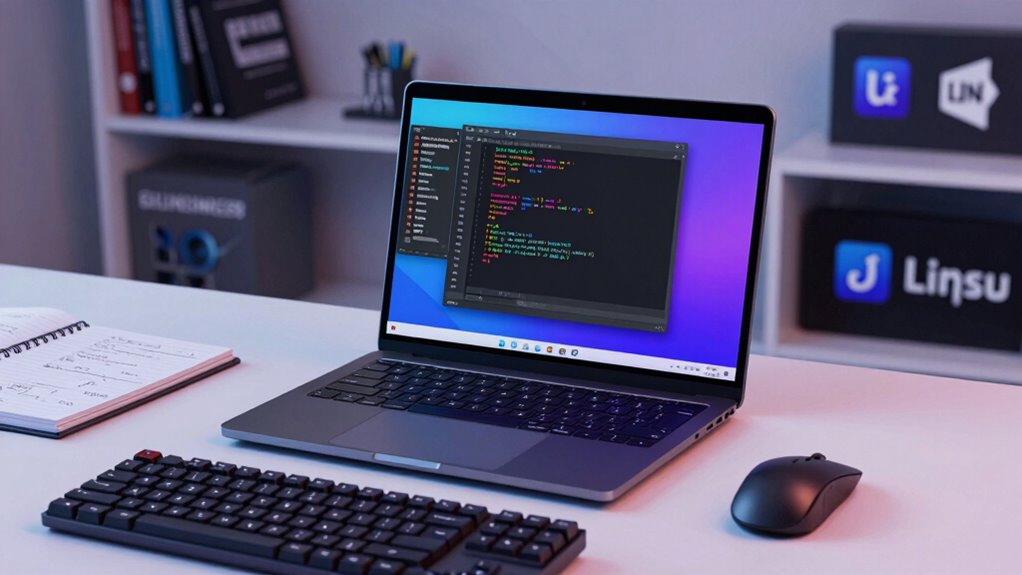
Many newcomers to Linux wonder which distribution will be easiest to get started with, yet still powerful enough for advanced tasks. Ubuntu, especially its Long Term Support (LTS) versions like 20.04 and 22.04, is often recommended because of its stability and extensive community support. It offers a user-friendly experience and strong hardware compatibility, making setup simpler for beginners.
For those seeking a more polished interface, Pop!_OS is a popular GNOME-based alternative that balances ease of use with advanced features. It is suitable for both new users and power users. Additionally, for users needing the latest hardware support, MX Linux with Nev.j’s ahs release can provide bleeding-edge driver access.
Starting with well-supported distributions ensures smooth setup and ongoing maintenance, which can ease the learning curve.
How Can You Assess Battery Life and Portability for Mobile Development?
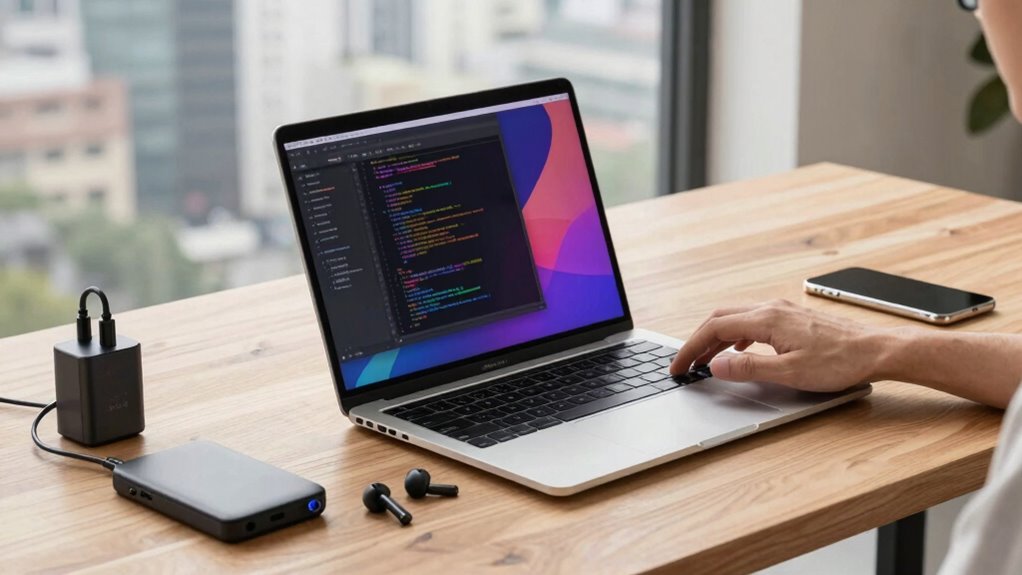
Evaluating battery life and portability is essential when choosing a Linux laptop for mobile development, as these factors directly influence how smoothly work can happen on the go.
- Look for laptops with a stated battery life around 7–8 hours, like the Framework Laptop 13, to understand real-world usage.
- Prioritize lightweight designs, such as the System76 Lemur Pro at about 2.5 pounds, and compact sizes for better portability.
- Choose power-efficient CPUs and GPUs, avoiding discrete GPUs when longer battery life is crucial.
- Consider display brightness and resolution, like the InfinityBook Pro 14’s 2,880 x 1,800 matte screen at 400 nits, for comfortable coding sessions.
Balancing portability and Linux compatibility ensures smooth, on-the-move development.
What Performance Features Make a Laptop Ideal for Heavy Workloads?
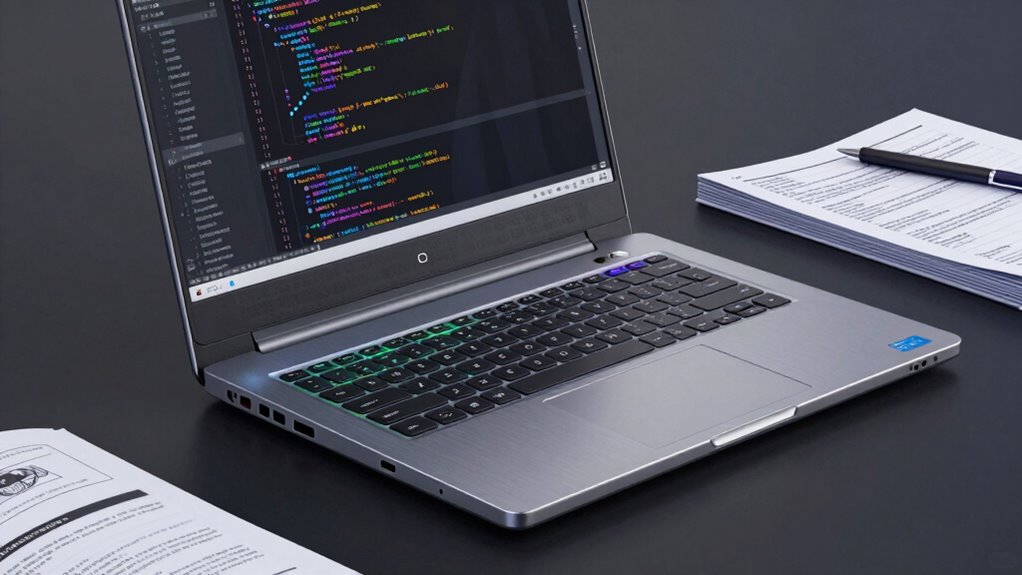
For heavy workloads, a laptop’s ability to handle demanding tasks depends heavily on its internal power and design. A high-core CPU, such as a 24-core processor, allows the laptop to perform multiple tasks simultaneously without slowing down. Pairing this with a discrete GPU, like the RTX 5090, accelerates graphics-intensive work, such as video editing or 3D rendering. Fast NVMe storage, usually 1–2 TB, ensures quick access to large files and smooth system responsiveness. These components work together to boost performance during intensive tasks.
Additionally, effective thermal management helps prevent overheating and throttling, keeping the laptop running smoothly. Overall, these features make a laptop more capable of tackling heavy workloads, providing a reliable tool for developers and power users alike.
How Do You Balance Cost and Features When Selecting a Linux Laptop?
Finding the right balance between cost and features when choosing a Linux laptop can feel like walking a tightrope, but it’s really about prioritizing what matters most for individual needs and budget.
- Considering refurbished laptops, like those labeled class B or C, can offer great value. They meet core needs such as 8 GB RAM and a usable CPU while saving money.
- Prioritize models with strong Linux compatibility, especially from brands like Dell or Lenovo, known for reliable support.
- For those needing high performance, options like the System76 Lemur Pro or Pangolin provide impressive specs, including up to 96 GB RAM and 16 TB storage, making them suitable for long-term use.
- Be cautious with newer hardware or brands with mixed Linux support, verifying compatibility through live-USB testing before committing.