
JBL Tune 130NC TWS Review
We may earn a commission from some links on this page.
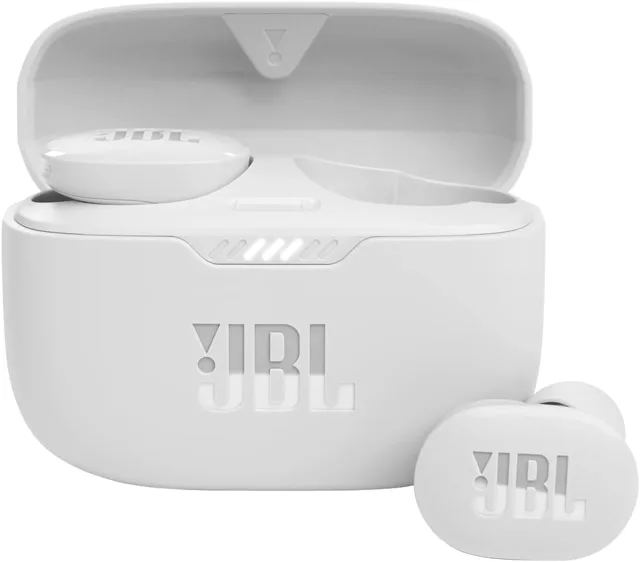
The JBL Tune 130NC TWS is a true wireless in-ear pair with noise cancelling, sold here in white. Two earbuds sit in a charging case, connect over Bluetooth and return to the case between listens. That combination covers the basics most buyers want from an everyday pair: nothing to untangle, a small case for a bag or pocket, and active noise cancelling for the commute. The sections below go through the design, what noise cancelling does in a pair like this, the fit, and the everyday routine of living with earbuds of this kind.
Table of Contents
Key Takeaways
- The JBL Tune 130NC TWS is a true wireless in-ear pair: two earbuds with no cable between them or to the phone.
- Noise cancelling is part of the model's name, so it is the headline feature to weigh when you compare it with other Tune earbuds.
- In-ear earbuds seal against the ear canal, which makes the fit and the ear tips as important as the electronics.
- A pair like this charges inside its case, so the case travels with you and the earbuds go back into it between listens.
- This version is the white one, and the seller lists its condition as new.
True Wireless In-Ear Design
TWS stands for true wireless stereo, and it means exactly what it sounds like: the left and right earbuds talk to each other and to your phone over Bluetooth, with no wire joining them. You take them out of the case, they connect, and when you are done they go back in. There is no cable to untangle in a pocket, and nothing to plug into the phone while you walk.
The in-ear part describes the shape. Instead of resting against the outside of the ear, an in-ear earbud pushes a soft tip into the opening of the ear canal. That does two jobs. It holds the earbud in place more securely than an open design, and it blocks some sound simply by filling the gap. This is passive isolation, and it is the reason in-ear pairs tend to sound fuller at low volume than earbuds that sit loose in the ear.
The trade-off is that the seal has to be right. If the tip is too small or sits crooked, bass drops away and noise cancelling has less to work with. Most pairs ship with more than one tip size for that reason, and it is worth spending a few minutes finding the size that seals without pressing.
Noise Cancelling on the Tune 130NC
Active noise cancelling works differently from the passive seal. Small microphones listen to the noise around you, the electronics work out its pattern, and the earbuds play an opposite signal to cancel the steady part of it. It is most effective on continuous low sounds: engine drone on a bus, the hum of an air conditioner, the rumble of a train. Voices, cutlery and sudden clatters are harder, because they change too quickly for the system to track.
In an in-ear pair the two methods stack. The tip blocks some sound before it reaches you, and the active system takes on the rest of the steady noise. That is why the seal matters so much here: a leaky fit gives the microphones more noise to fight and gives your ears less help. JBL names this model as a noise cancelling pair, and the feature is the main reason to pick it over a plain Tune earbud.
Expect the effect to be strongest in the places you would want it: public transport, an open-plan office, a long flight. Do not expect silence. Noise cancelling lowers the floor of constant sound, which lets you listen at a lower volume, and that is the practical benefit rather than a switch that turns the world off.
Detailed Features
The feature set is simple, and that is part of the appeal. Below is what this model is and what the seller states about it, in plain terms.
| Feature | What is stated |
|---|---|
| Model | JBL Tune 130NC TWS |
| Type | True wireless in-ear headphones |
| Noise cancelling | Named as a noise cancelling model |
| Color | White |
| Condition | New |
| Charging | The earbuds charge in their case |
Three things are worth checking before you buy any true wireless pair, and they apply here:
- Whether the tip sizes in the box suit your ears, because the seal decides both comfort and noise cancelling.
- How you will carry the case, since it is the charger as well as the holder.
- Whether the controls and app features match how you listen, rather than assuming every pair works the same way.
Fit, Seal and Everyday Comfort
An in-ear pair lives or dies on fit. The tip has to sit deep enough to seal but not so deep that it aches after an hour. Start with the middle size, try the smaller and larger tips in each ear separately, and pay attention to whether the sound changes when you turn your head. A seal that breaks when you move is a seal that is too loose.
Soft silicone tips are the usual choice because they flex with the ear canal, and they can be washed when they get waxy. Keeping them clean matters more than most people expect: a clogged tip muffles the sound and can make one earbud seem quieter than the other.
For long listening sessions, take the earbuds out every hour or so. In-ear designs put a little pressure on the canal, and a break resets that. If you wear glasses, the arms sit well away from an in-ear pair, so there is no conflict there. Hats and helmets are the bigger issue, because they can nudge an earbud loose as you put them on.
Charging Case and Daily Routine
The case is the heart of a true wireless pair. It holds the earbuds when they are not in your ears, and it is where they charge. The habit that keeps the pair ready is simple: earbuds go back in the case whenever you take them out, and the case gets plugged in overnight or whenever you notice it is low.
Two small routines save trouble. First, keep a charging cable where the case lives, so topping it up is not a hunt for the right lead. Second, check that both earbuds have seated properly before you close the lid, because a bud that sits crooked will not charge and will be flat the next time you reach for it.
The case also protects the earbuds. Loose in a bag, an in-ear pair collects lint in the nozzles and takes knocks that can loosen the tips. Keeping the case closed when it is not in use is the easiest way to make the pair last.
Advantages and Disadvantages
The case for and against this pair comes down to the kind of product it is rather than a long list of extras.
| Advantages | Disadvantages |
|---|---|
| No cable between the earbuds or to the phone | In-ear tips do not suit every ear, and a poor seal weakens both bass and noise cancelling |
| The in-ear seal blocks some sound before the electronics do anything | Active noise cancelling does less against voices and sudden sounds than against steady drone |
| Noise cancelling is built into the model rather than an extra | The pair depends on its case, so a lost or forgotten case means no charging |
| A charging case keeps the earbuds protected between listens | There is no cable option, so listening depends on the earbuds holding charge |
Verdict
The JBL Tune 130NC TWS is a sensible pick for someone who wants a true wireless in-ear pair with noise cancelling and does not want to spend flagship money. It covers the commute, the office and the walk, and the white finish keeps it simple. If your priority is the deepest bass, the longest battery or a pair built for running, look at the specifications of other models before you decide; this one is about the everyday basics done properly.
Frequently Asked Questions
Are the JBL Tune 130NC TWS Truly Wireless?
Yes. True wireless means there is no cable between the left and right earbuds and no cable to the phone. The two earbuds connect to each other and to your device over Bluetooth, and they charge in the case.
Do They Have Active Noise Cancelling?
Yes. JBL names this model as a noise cancelling pair. The in-ear tips add passive isolation on top, and the two together are what lower steady background noise.
What Color Is This Version?
This listing is the white version. The seller lists the condition as new.
Do the Earbuds Charge Without the Case?
No. True wireless earbuds of this kind charge inside their case, so the case is the charger as well as the holder. Keep it with you and top it up when it runs low.
Do They Come With Different Ear Tips?
True wireless in-ear pairs normally ship with more than one tip size so you can get a seal. Check the box contents for the sizes included and try each one in both ears before settling on a size.