
Choosing the right smart door lock involves considering style, security, and compatibility. It’s helpful to identify what features matter most—such as keyless entry, remote control, or advanced encryption. Think about your door type and whether you prefer a keypad, fingerprint, or app access. Compatibility with your smart home system, ease of installation, and battery options are also key. Avoid overwhelm—this guide will walk through each step to help find the perfect fit for your home.
How to Determine Your Smart Lock Needs and Priorities
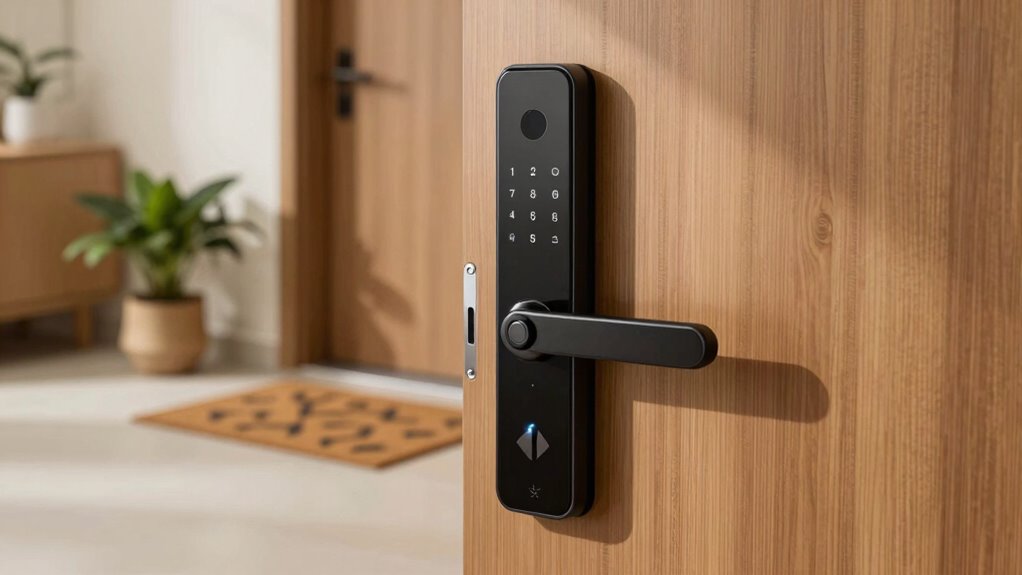
Have you ever wondered how to choose the perfect smart lock for your home? The key lies in understanding your needs and priorities. First, consider smart lock features: do you prefer a retrofit option that installs easily over your existing deadbolt or a full replacement that integrates seamlessly?
Next, think about access methods: do household members need PIN codes, fingerprint biometrics, or app-based entry? Each method offers different convenience levels.
Lastly, your connectivity preferences matter. Bluetooth is great for local use, Wi-Fi allows remote access, and Z-Wave or Zigbee connect your lock to a broader smart home system. By weighing these factors carefully, you can find a smart lock that matches your lifestyle and security concerns perfectly.
What Features Matter Most for Your Home Security?
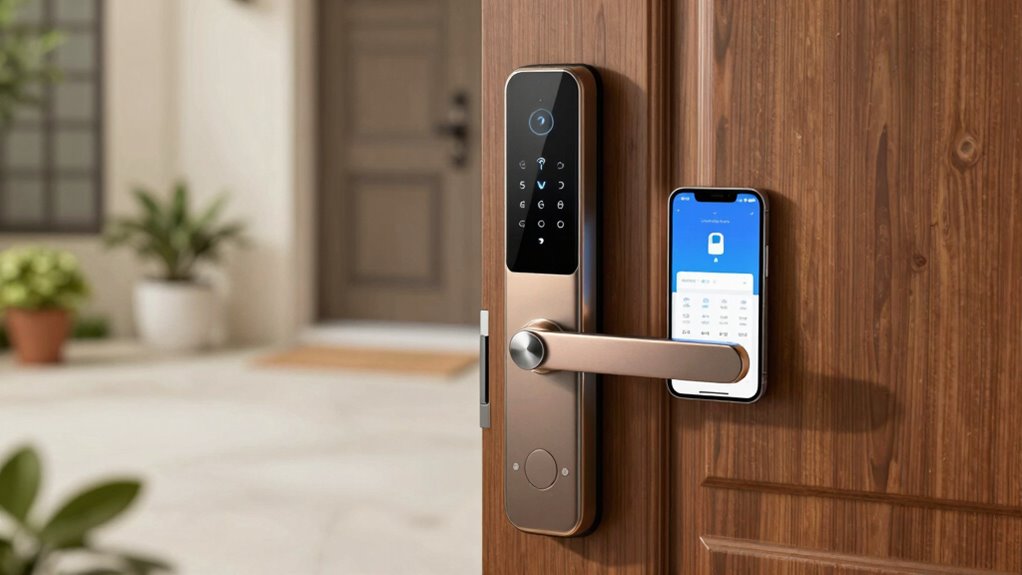
What features should homeowners prioritize to keep their homes secure? When choosing smart door locks, key security features include strong security protocols like end-to-end encryption, which protects data from hackers. Unique access codes and activity logs help monitor who enters and when, adding layers of access control.
Convenience features such as remote control, auto-unlock, and auto-lock make daily life easier, especially when hands are full. Backup options like manual keys or physical overrides are vital in case of power or connectivity issues. Compatibility with existing smart home systems, like Alexa or Google Home, ensures seamless integration.
Additionally, reliable battery life and easy replacement prevent unexpected lockouts, keeping homes secure without hassle. These features combine to offer both safety and peace of mind.
How to Choose the Right Lock Type and Compatibility
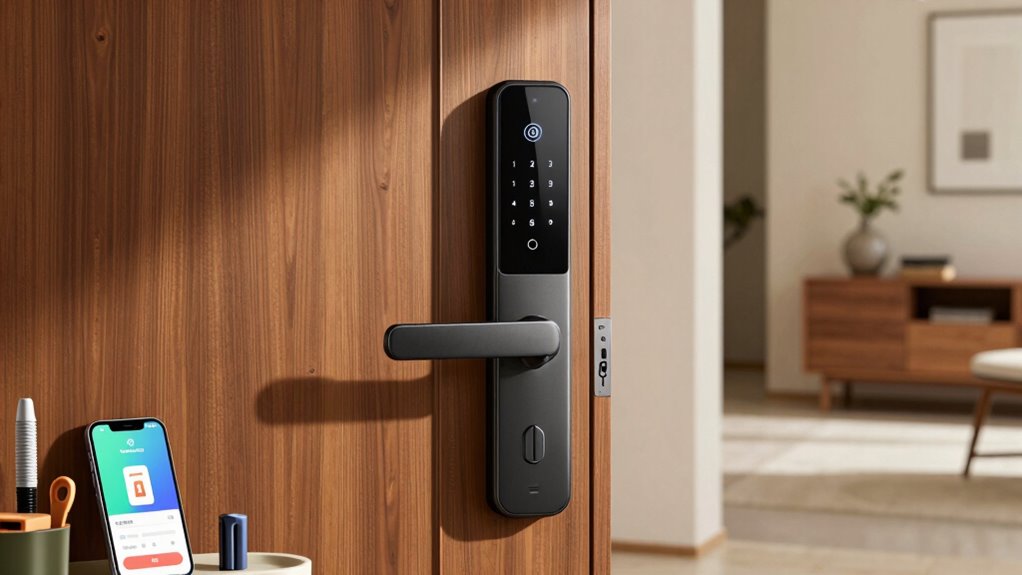
When selecting a smart lock, the type of lock that best fits the home or apartment setup can make a big difference in ease of installation and daily use. For example, door locks like retrofit models install over existing deadbolts, making upgrades simple without needing to change the strike plate. They often support app control, allowing homeowners to lock or unlock doors remotely.
For those wanting a fingerprint door lock, these often come as standalone options or are integrated with smart features. If maintaining current keys is important, look for compatible locks with features like Kwikset SmartKey or interior-mount designs that don’t require hardware replacement. Considering lock types and compatibility ensures seamless integration with your smart home ecosystem and makes daily access straightforward and stress-free.
Which Connectivity and Smart Home Ecosystem Works Best?
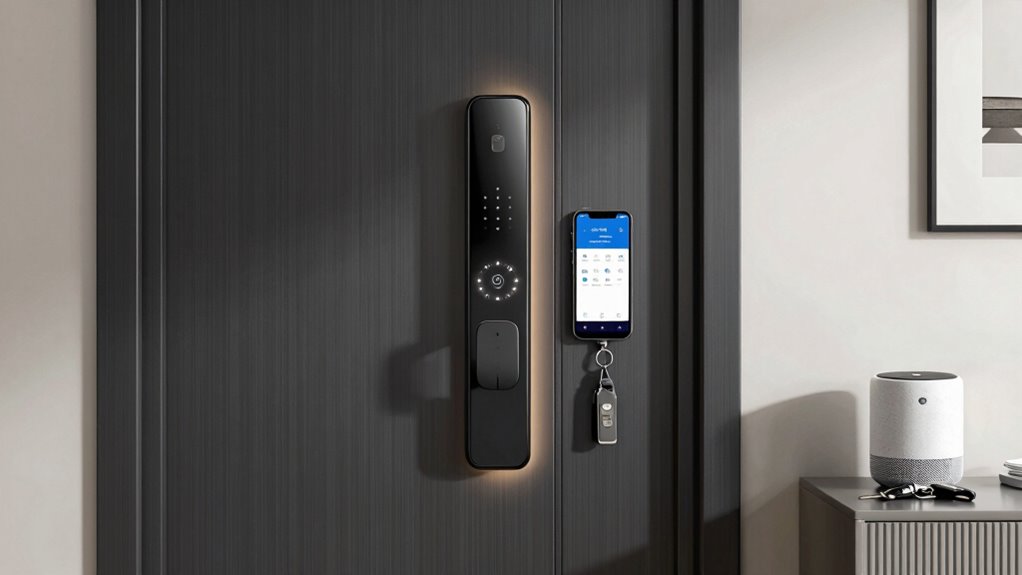
Deciding which connectivity and smart home ecosystem best suits a smart lock can seem like traversing a maze, but understanding the key options makes it much simpler. Many locks now support Matter, a universal standard that works seamlessly with Alexa, Google Home, and Apple HomeKit, offering broad compatibility.
Some locks focus on specific ecosystems, like Lockly Visage for Apple users or Kwikset Halo for fingerprint access without Apple support. Z-Wave and Zigbee integrations allow locks to connect with various smart hubs beyond Wi-Fi and Bluetooth. Reliable remote access and activity logs, such as those from August and Yale, add extra convenience.
| Ecosystem | Best For | Compatibility | Example Locks |
|---|---|---|---|
| Apple | Apple-centric homes | Strong HomeKit integration | Yale with Matter, Lockly Visage |
| Android and Google users | Matter support, Google Assistant | Schlage, Danalock |
How to Assess Installation Ease and Compatibility With Your Door
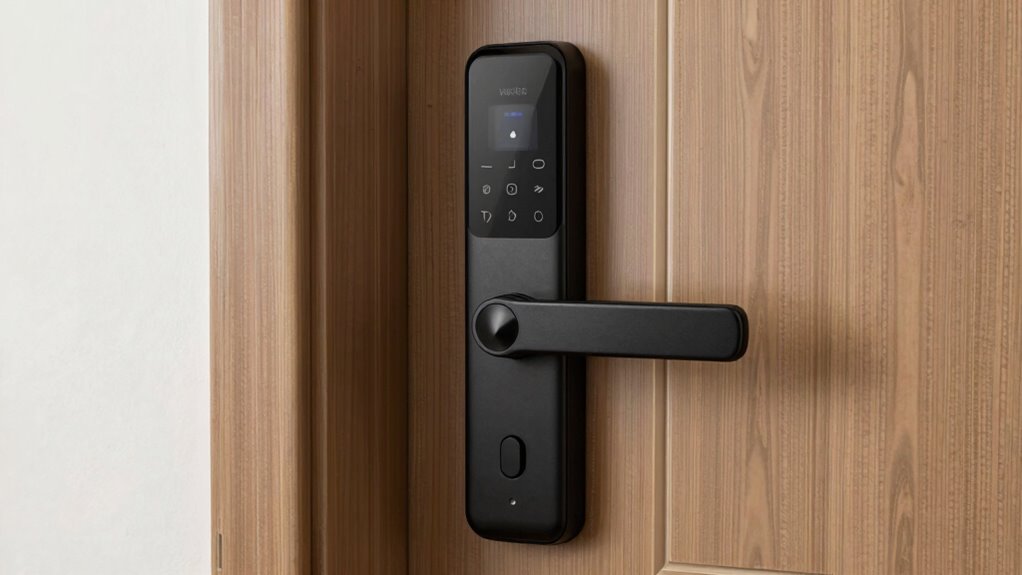
Have you ever wondered if a smart lock will fit your door before investing in it? Checking compatibility is easier than you might think. Retrofit locks are often simpler and less expensive to install than full deadbolt replacements, especially for those who want a quick upgrade. Most smart locks can be installed with just a Phillips-head screwdriver and basic tools like a tape measure and drill, making setup straightforward.
Inside-door mounts are popular because they let you keep your existing exterior key, which is handy for tenants or landlords. Some brands, like Kwikset SmartKey, even allow you to re-key the lock to match your current keys.
Before installing, ensure the lock aligns properly with the strike plate and fits your door’s thickness and bore hole to avoid surprises later.
What Battery Life and Power Options Should You Consider?
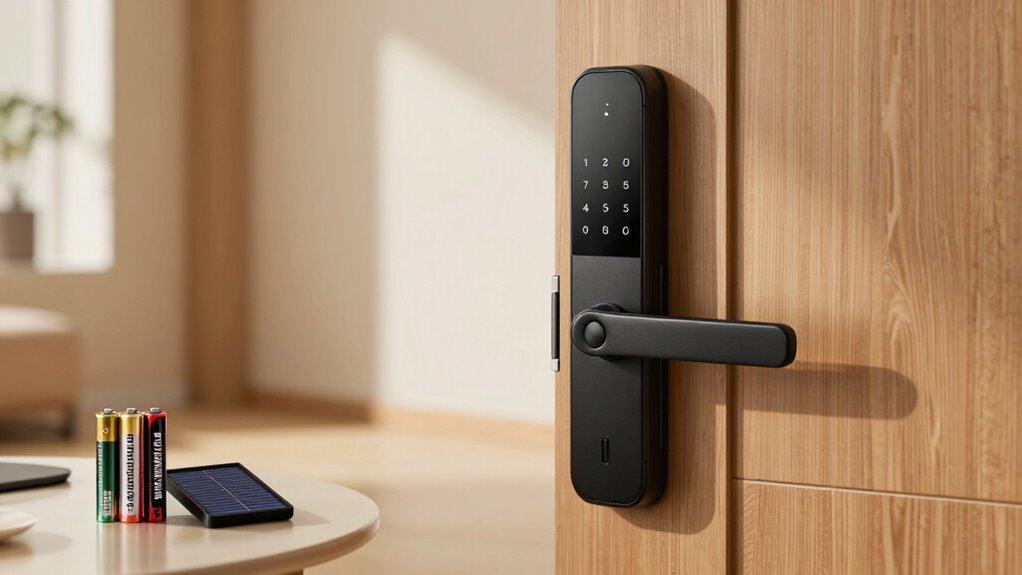
Battery life is a key factor to contemplate when choosing a smart lock, as it directly affects how often you’ll need to replace or recharge the power source. Some models rely on replaceable AA or AAA batteries, which are easy to swap out but may need changing every 6 to 8 months.
Others, like Yale or Visage, use rechargeable packs that can be charged externally or come with extra packs, reducing the number of replacements.
Weather and extreme temperatures can impact battery performance, so selecting a lock with durable, high-quality materials is wise.
Many locks include backup options like traditional keys or external power sources to prevent lockouts during power loss.
Considering these factors ensures your smart lock remains reliable and hassle-free.
How to Manage User Access and Guest Permissions?
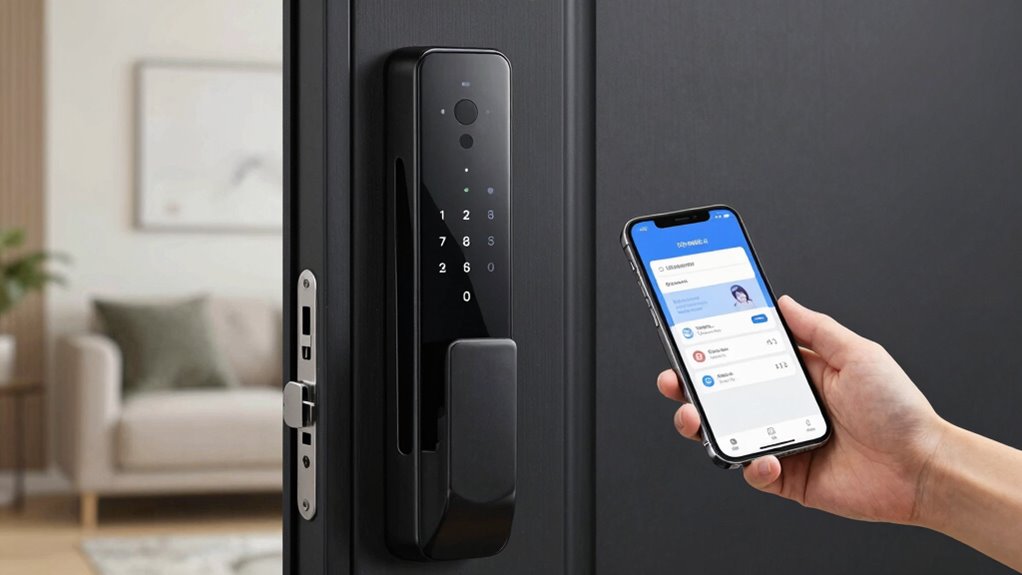
Managing who can access a smart lock and when is an important part of keeping a home secure and convenient.
Many smart locks let homeowners create guest passes or temporary access codes, which are perfect for visitors or service workers. These codes can be set to work only during certain hours, so there’s no need to share permanent keys.
Some locks also support unique user codes or fingerprints, allowing homeowners to track who entered and when through activity logs. For apartments, it’s smart to choose locks that preserve exterior key access—important for landlords.
Additionally, many locks offer remote management and real-time alerts, letting homeowners supervise guests from anywhere. Compatibility with smart home systems like Alexa or Google Assistant can also streamline access management, making life easier and safer.
What Budget Range Fits Your Requirements and Features?
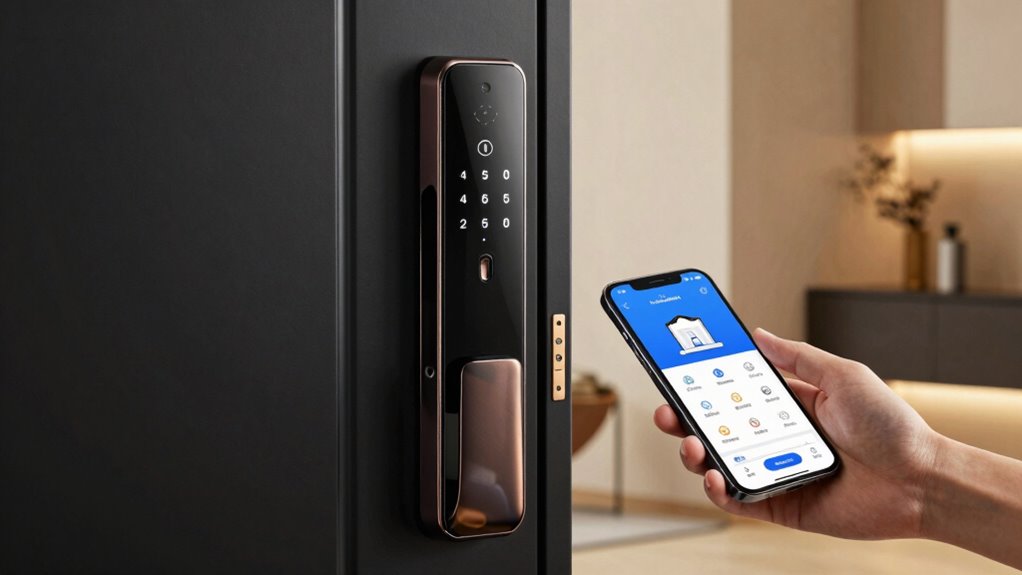
Finding the right smart lock often depends on balancing features with budget, and understanding what price range fits personal needs can make the selection process smoother. Prices vary widely: basic models like Kwikset start around $69.99, while more advanced options such as August or Yale can range from $130 to over $300.
For those seeking affordability, the Ultraloq U-Bolt Pro offers great value with features like a keypad, fingerprint scanner, and solid Wi-Fi range—all within a reasonable budget. Retrofit locks, like the August Wi-Fi Smart Lock, provide convenience by fitting existing deadbolts but tend to be bulkier and pricier. When planning your budget, consider extra costs such as installation tools or re-keying to keep things compatible with your landlord.
How to Ensure Your Smart Lock Meets Your Style and Durability Preferences?
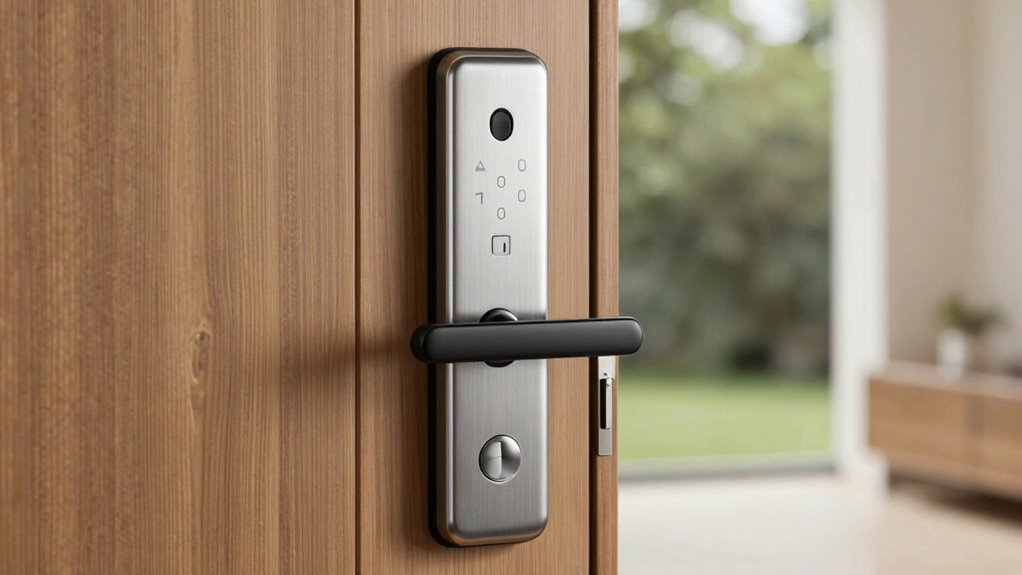
When considering the style and durability of a smart lock, it’s helpful to think about how well it matches the look of your home and how sturdy it will be over time. Materials like zinc, steel, or brass not only suit different aesthetics but also stand up better against weather and daily wear.
For those who care about design, compact and unobtrusive models like Level Lock Pro or Yale Assure 2 can blend seamlessly into existing hardware. Durability is key—look for locks with solid build quality and security standards such as BMHA to resist tampering and harsh conditions.
Also, consider battery life and power management, whether rechargeable or replaceable, to keep the lock working smoothly. A well-chosen lock balances style and strength, giving peace of mind with a look that fits your home.